The Trembling Bridge Politics, Power, and the Dissolution of Global Order
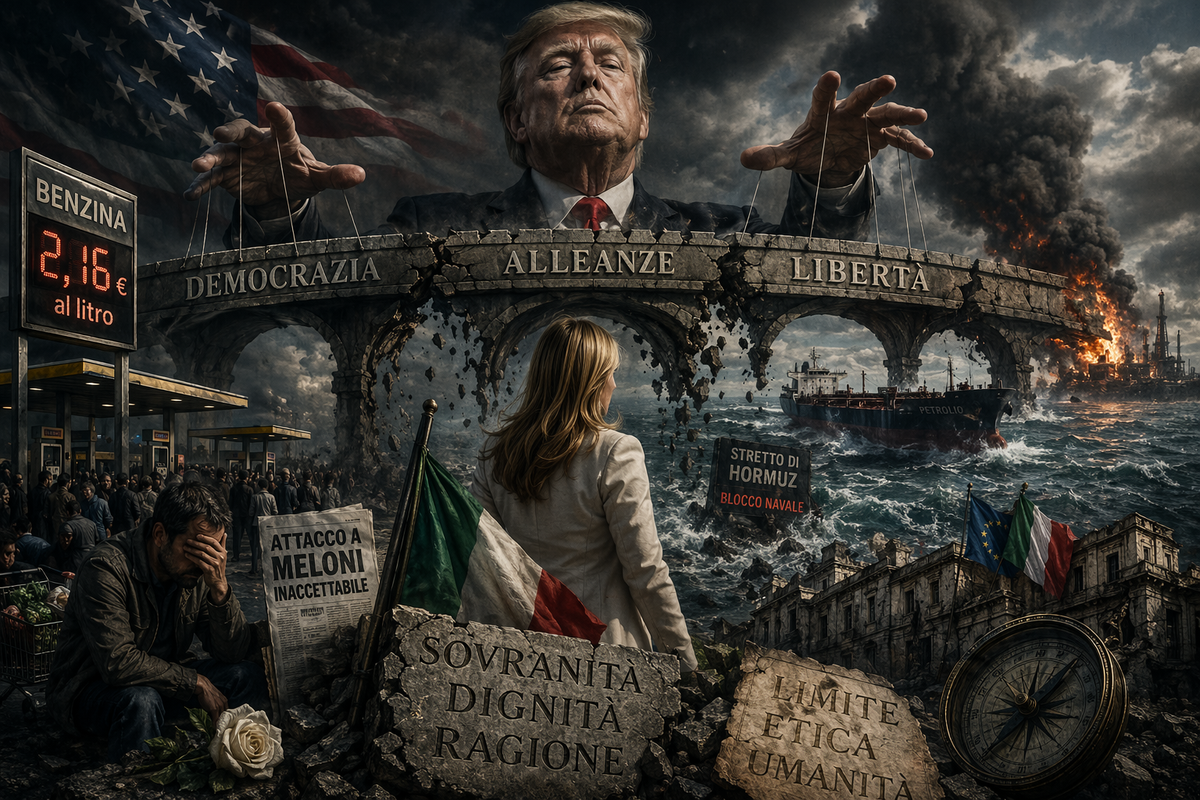
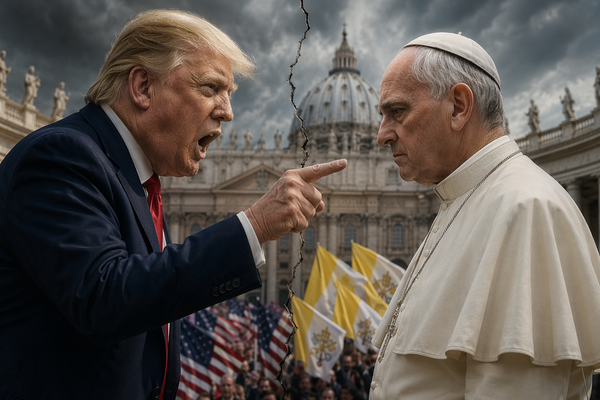
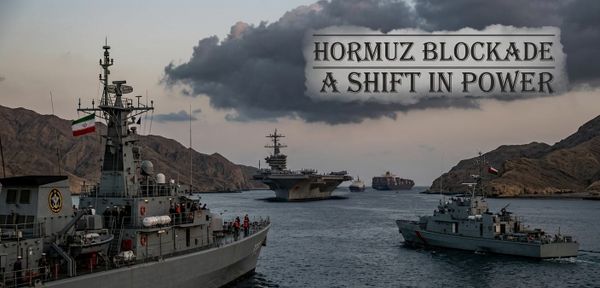
The Eclipse of Reason: Anatomy of a Delusion of Omnipotence April 14, 2026 marks the point of no return at which international politics ceases to be the management of interests and becomes the projection of a pathology. The delusion of omnipotence of Donald Trump has overflowed the boundaries of metaphor and taken on the weight of clinical reality. Experts analyzing his recent speeches no longer speak of narcissism, but of a psychotic rupture with the principle of reality. The President no longer appears to act in order to obtain results, but to confirm to himself his own divine nature, a condition in which the Self expands until it coincides with the entire universe, nullifying any external will. 1. The Clinical Diagnosis: Beyond Narcissism In recent days, an unprecedented coalition of American psychiatrists and neurologists has raised a red alert. Dr. Bandy Lee and other mental health experts have identified in Trump’s behavior the traits of what some define as “authoritarian solipsism,” a condition that, according to these readings, recalls the clinical manifestations of a dysfunction of the frontal lobes, the part of the brain that regulates inhibition, judgment, and the perception of limits. This clinical condition explains why Trump declared, with glacial calm: “I am the law, I am morality, I am the future.” For experts, these are not electoral hyperboles, but evidence that the subject has ceased to perceive other human beings—whether allies or institutions—as autonomous entities. The attack on the Pope, in this context, has been cited by experts merely as the triggering episode: proof that, for Trump, there exists no moral authority superior to his own mind. The delusion of omnipotence leads him to believe that his will can bend even the laws of physics and economics. 2. Pathological Infallibility A central element of the delusion, highlighted by clinical commentators on major American networks, is the inability to process error. In Trump’s distorted world, if gasoline rises to €2.16 or if the Strait of Hormuz burns, the fault cannot lie in his strategy, because he is perfect by definition. Psychiatrists define this phenomenon as “paranoid projection”: the leader shifts responsibility for his own failures onto “internal enemies” or “weak allies,” convincing himself that only his iron hand can remedy disasters he himself has created. “We are not dealing with a man who wants to win, but with a man who believes he has already won by divine right,” explain mental health analysts. “The delusion of omnipotence erases doubt. If the world does not obey, it is the world that is wrong, not the President.” 3. The Mind as the Only Boundary Trump’s delusion of omnipotence feeds on total sensory isolation. He lives in an echo chamber where every word becomes absolute truth the moment it is uttered. Neuroscience experts have noted how his language has become increasingly abstract and messianic: no longer about taxes or treaties, but about “purifying fire” and “final justice.” This mental state is the ultimate danger: a man convinced of his own omnipotence feels no need to negotiate, because negotiation implies the recognition of an Other. When Trump declares that his mind is the only boundary of the possible, he is announcing to the planet that objective reality has been officially replaced by his subjective will. In this first section, the picture is dramatically clear: America and the world are hostages of a clinical delusion that has transformed the control room into a theater of absolute arbitrariness. The collapse we see outside—from gas stations to foreign ministries—is nothing but the external reflection of the storm raging within a mind that has ceased to recognize the human limit. Section II: The Price of Disobedience – The Clash with Palazzo Chigi If the first part of this essay has outlined the contours of a mind that has lost its sense of limits, this section analyzes how such hypertrophy of the ego translates into an act of political cannibalism. The frontal attack on Giorgia Meloni on April 14, 2026 represents the “zero case” of a new era: the moment in which the Atlantic alliance ceases to be a coordination of free nations and becomes the stage of unidirectional geopolitical bullying. For the American President, the Italian Prime Minister is no longer a partner with whom to share a vision of the world, but an extension of his own will that, by daring to manifest even minimal autonomy, must be annihilated in the media. 1. The Prime Minister as a “Shattered Mirror” of the Single Will Authoritarian solipsism does not tolerate nuance. When Prime Minister Meloni attempted to exercise the “good sense of a stateswoman,” pointing out that Italy could not bear the costs of a frontal conflict in Iran while gasoline was breaking through €2.16, she shattered the illusion of total control of the White House. For a psyche that perceives itself as the sole engine of history, the prudence of an ally is not a macroeconomic variable, but a political sacrilege. Trump’s words—“I am shocked by her, I thought she was courageous”—are proof of a distorted perception of others’ sovereignty. He no longer recognizes the legitimacy of the national interests of partners. In his mental universe, Italy does not exist as a sovereign State with a people to protect from energy starvation, but as a pawn that must move according to his impulses. To define Meloni’s position as “unacceptable” is to declare that Italian democracy is subordinate to the mood of the American Commander-in-Chief. Experts note how this attack is a form of systematic discredit: Trump strikes Meloni precisely at her strongest point—coherence—in order to undermine her internal authority. 2. Energy Blackmail as an Instrument of Domination At this stage, American foreign policy has slipped toward an aggressive messianism. The blockade of the Strait of Hormuz is used as a club to punish insubordination. While Italy sinks under the weight of unsustainable energy prices, Washington uses the suffering of the Italian population as leverage to humiliate its leader. “If you don’t follow me, I’ll let you drown in your fuel crisis”: this is the subtext of the statements made in recent hours. It is the complete inversion of the concept of leadership. The leader who has lost contact with reality does not protect the tribe, but blackmails it to obtain confirmation of his own power. The attack on Meloni serves to send a message to the entire West: ideological affinity counts for nothing in the face of the President’s need to see his own subjective infallibility validated. The Prime Minister, who sought to balance Atlantic loyalty with Italy’s economic survival, is treated as a traitor simply because she reminded Washington that Italians must be able to heat their homes. 3. The Erasure of the Interlocutor Psychologically, the attack on the Italian Prime Minister responds to the need to eliminate every form of alterity. A mind dominated by such hyper-referentiality cannot have neighbors, only subjects or enemies. The transformation of Meloni from “great friend” to “shocking disappointment” occurs in the blink of an eye because the President’s cognitive structure does not process complexity. One is either an appendage of his vision or an obstacle to be removed. This attitude is leading to the destruction of the interpersonal trust that underpins all international cooperation. If a leader knows that minimal technical dissent can trigger a devastating public attack, diplomacy dies. The attack on Meloni is thus the act through which Trump officially declares that America has renounced partnership in favor of psychological vassalage. By destroying the reputation of those who supported him, he feels even more powerful, ignoring that he is sawing off the very branch on which global security rests. In conclusion, the clash with Meloni emerges as the symptom of a leadership that has lost every protective function. It is not foreign policy; it is a settling of personal scores. As Italy watches with anguish the prices at the pump and the flames in the Gulf, it must acknowledge that its historic ally is guided by a will that considers the sacrifice of a friendly nation an acceptable price for the celebration of its own ego. The “betrayal” invoked by Washington is in reality the reflection of an American betrayal of every pact of solidarity, an act of force that leaves Italy alone in the face of chaos. Section III: The Fire of Hormuz and the Blackmail of Scarcity April 14, 2026 marks the transition from verbal aggression to total logistical offensive. With the announcement of a naval blockade in the Strait of Hormuz, the American administration has chosen to play the ultimate gamble: to sever the umbilical cord that feeds the energy needs of Europe and Asia in order to bend Tehran’s resistance. This is not a measure of maritime policing, but an act of economic warfare that deliberately ignores the principle of reality: Hormuz is the bottleneck through which 20% of global oil production and 25% of liquefied natural gas (LNG) transit. To close this passage is, in effect, to switch off the lights of industrial civilization as we have known it, in the name of a political will that accepts no mediation. 1. Oil at $100 and Energy “Captivity” The immediate impact of this decision on the daily lives of European citizens, and Italians in particular, is devastating. With crude oil breaking the $100-per-barrel threshold in less than forty-eight hours, the economic system has entered an inflationary spiral with no recent precedent. Gasoline at €2.16 per liter is not merely a number on fuel station boards; it is the signal of the collapse of mobility and food logistics. In this scenario, the rhetoric of the White House reaches peaks of pure cynicism. Trump, speaking to journalists, dismissed the suffering of allies with a sentence that perfectly encapsulates his current posture: “We don’t need the Strait, but the world does.” It is the confession of a blackmail: the United States, having become energy independent, uses the fragility of its partners (such as Italy, dependent on Qatari gas transiting precisely through Hormuz) as leverage to force an agreement with Iran that the Islamabad negotiations failed to produce. For the President, the paralysis of Italian industry and the desperation of families watching their purchasing power evaporate are merely “collateral damage” necessary to demonstrate who holds the keys to the world. 2. The War on Water and the Final Escalation But the naval blockade is only half the picture. The threat to bomb Iranian civilian infrastructure—including desalination plants and electrical grids—introduces an element of strategic barbarity that breaks every international convention. Trump has openly declared: “The only thing they have left is water; hitting it would be devastating.” This is not the language of nuclear deterrence, but the language of a hegemony that no longer recognizes the distinction between military targets and the biological survival of a nation. It is in this context that Giorgia Meloni’s refusal takes on historical weight. Italy, finding itself physically and politically unable to adhere to an operation that would destroy its economy and stain its honor, has become the ideal scapegoat. The American President does not accept that an ally may raise objections based on the energy hunger of its own people. If Iran is the enemy to be crushed, every ally that does not immolate itself on the altar of the blockade is, by extension, an accomplice. This mental mechanism transforms Western energy security into a test of blind loyalty: whoever does not accept €3 gasoline and economic recession to support Washington’s command is branded “shocking” and “lacking courage.” 3. The Power Vacuum and the End of Maritime Order Finally, the blockade of Hormuz marks the end of freedom of navigation as a pillar of global order. If the United States, historically the guarantor of the seas, becomes the first to seal an international strait for unilateral purposes, the message sent to Moscow and Beijing is unequivocal: force is the only parameter of legitimacy. As the American fleet intercepts tankers, the world observes an image that admits no interpretation. The inflation generated by this move is pushing Europe toward a social crisis that could erupt into street revolts, a result that Trump seems to ignore or, worse, to consider useful for destabilizing those leaders who do not promptly respond to his commands. The Strait of Hormuz as a noose, and the will of a single man as the sole arbiter of the industrial destiny of a continent. The blazing situation in the Gulf is not only burning ships; it is burning the foundations of the global market and the residual trust in America’s role as guardian of stability. Conclusion This conclusion does not intend to be merely the epilogue of a political chronicle, but a deep reflection on the very nature of Western civilization when deprived of its ethical and rational compass. If the previous sections have dissected the dynamics of a psyche in command, the rupture with institutions, and the energy blackmail, the closing of the essay must confront the fundamental question: what remains of the West when the idea of “community” is replaced by the solipsism of a single individual? 1. The Dissolution of the Other and the Twilight of the Logos The drama unfolding between Washington, Rome, and the Persian Gulf is, ultimately, a failure of the Logos, understood as discursive reason and the capacity for mediation. Classical political philosophy teaches us that the strength of a democracy—and of an alliance of democracies—lies in the ability to recognize the legitimacy of the Other. The moment the American command ceases to dialogue and begins to impose its vision as absolute truth, we witness a regression toward a Hobbesian “state of nature,” but on an atomic scale. The attack on figures such as the Pope or Prime Minister Meloni is not merely an act of diplomatic discourtesy, but a philosophical rejection of pluralism. When the hypertrophic Self convinces itself that it is the origin and the end of justice, the concept of “shared truth” vanishes. The crisis of this April 2026 shows us that technique and military power, when deprived of even a minimal moral framework, become instruments of an active nihilism. The blockade of Hormuz is not only an act of economic warfare; it is the expression of a will that has ceased to care about the human consequences of its actions, elevating scarcity into a method of governance. 2. The Prison of the Ego and the Sacrifice of Freedom The paradox of the current condition is that the claim to omnipotence inevitably leads to a form of solitary imprisonment. A leader who no longer recognizes allies, but only pawns, ends up inhabiting a world emptied of meaning, where every victory is hollow because there is no one left with whom to share it. The West was founded on the idea of the “limit”: the limit of power before the law, the limit of man before the sacred, the limit of the State before the freedom of the citizen. The phenomenon we are witnessing is the systematic removal of every limit. Without the restraint of diplomacy (Meloni) and without the call of ethics (the Pope), power becomes pure kinetic force, destined to crash against reality. Gasoline at €2.16 and the specter of energy famine are the tolling bells of a reality rebelling against the claim of omnipotence. If Trump’s America has chosen to become a closed continent, the West today has the possibility—and the necessity—to redraw itself as an archipelago: distinct, autonomous units, yet connected by routes that do not pass through a single center. This is not surrender; it is a reconfiguration. The punishment for the delusion of a single man must not fall upon entire nations: it can instead become the occasion to build an order that does not depend on the stability of a single mind. 3. A Possible Resolution: The Return to Humanistic Autonomy How do we escape this dead end? The resolution cannot be merely technical or military; it must be cultural and philosophical. Europe, and Italy in particular, must rediscover the value of its “strategic autonomy” not as an act of hostility toward America, but as an act of safeguarding Western reason. The resistance shown by Palazzo Chigi in the face of energy blackmail is the first embryo of this resolution. It is the reaffirmation that the lives of citizens and social stability possess a dignity superior to the whims of a volatile command. This is the ground upon which Europe can still build a credible alternative to chaos. 4. Beyond the Twilight Ultimately, 2026 places before us a merciless mirror. It shows us that democracy is fragile and that alliances are made of flesh, blood, and trust, not only of signed treaties. The resolution of this crisis will necessarily pass through an awakening: omnipotence is an illusion that always precedes collapse. Italy today has the historic opportunity to become the voice of a new political humanism, capable of saying “no” to the logic of blackmail and “yes” to the logic of responsibility. Only through the rediscovery of limits and the rejection of the cult of personality can we hope to see an order that does not depend on the stability of a single mind.